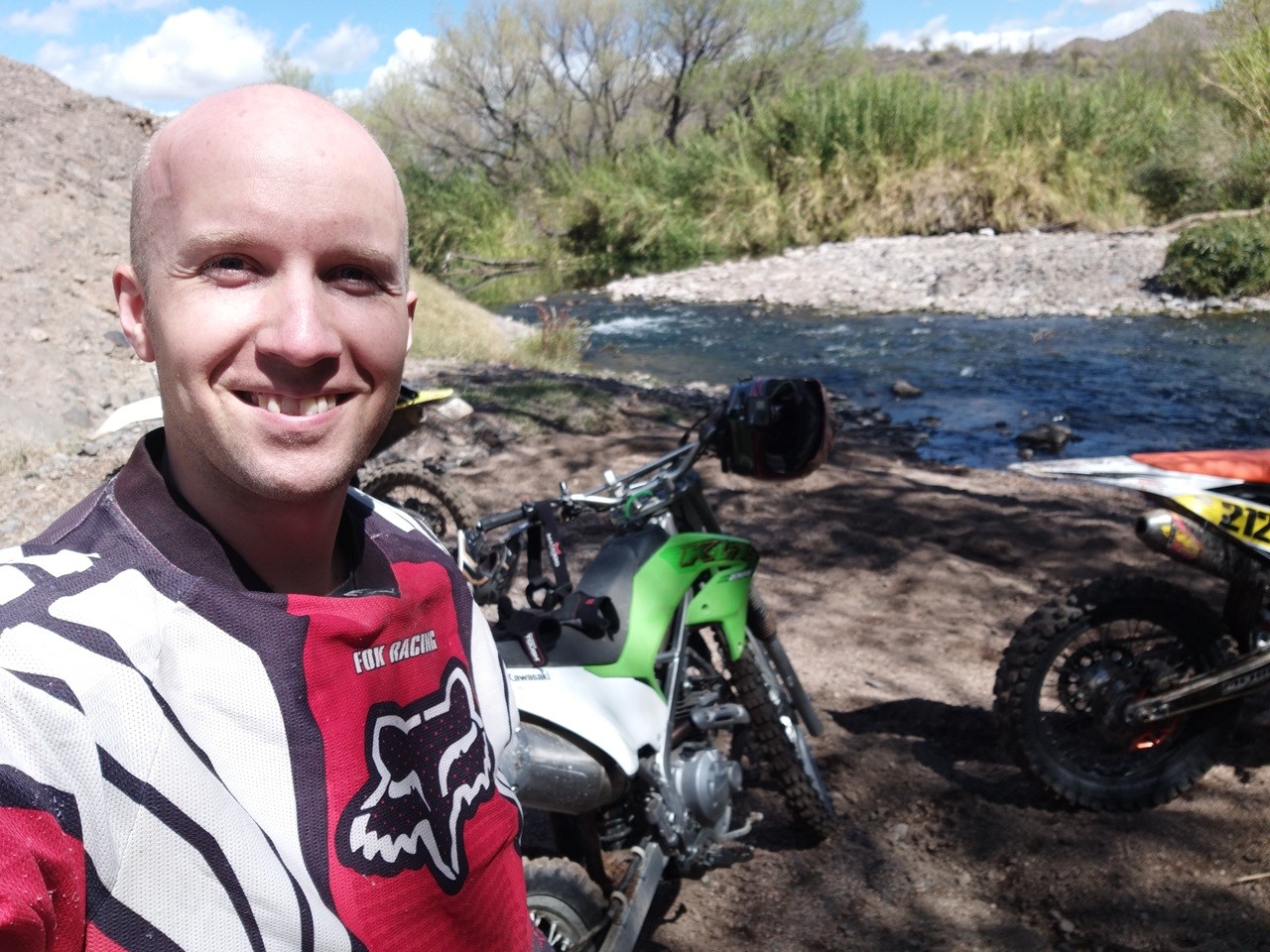
I've owned multiple KLX140s, ridden them on trails, and used them around newer riders. I've also personally tuned the stock KLX140 carburetor to improve starting, throttle response and overall performance.
If your KLX140 is stock, I wouldn't start by throwing expensive performance parts at it. The best first mod depends on what you're actually trying to improve.
For most riders, I'd start with proper carb tuning, then look at gearing or suspension depending on your weight and riding style. If you still want more power after that, then I'd consider the intake, carburetor, exhaust or engine.
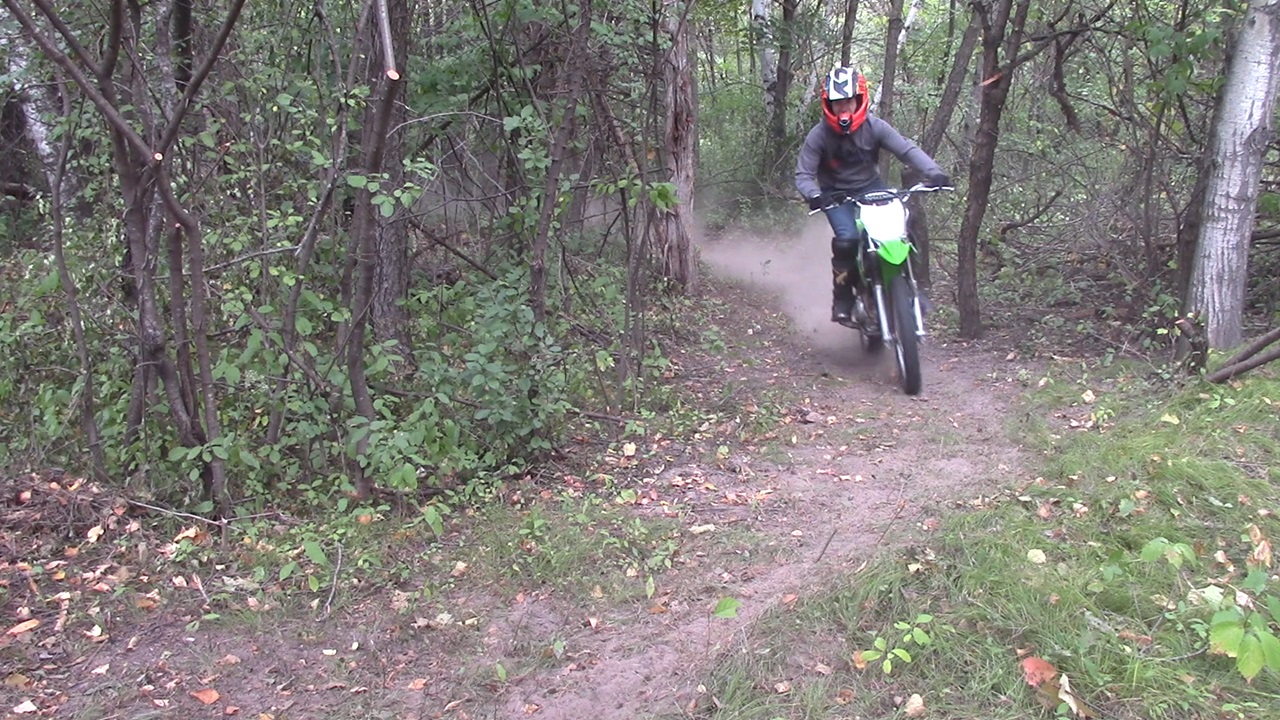
Below I'll show you which KLX140 mods I'd actually consider, what each one improves, and which upgrades probably aren't worth the money for the average trail rider.
Best KLX140 Mods at a Glance
| If you want... | I'd start with... | Cost | My take |
|---|---|---|---|
| Easier starting / smoother running | Carb tuning/jetting | $ | Do this first |
| Better slow-speed trail riding | Lower gearing | $ | Worth it |
| Better suspension for a heavier rider | Springs/setup | $$ | Worth it |
| Better throttle response / more power | Intake + jetting | $ | Worth it |
| More power throughout the range | Carb upgrade | $$ | Depends |
| More power + different sound | Exhaust + jetting | $$$ | Optional |
| Significant engine power | Big-bore kit | $$$ | Only if you really need it |
| Easier clutch control | Auto clutch | $$$ | Depends on rider |
| More aggressive engine response | Lightened flywheel | $$ | Not my first choice for trails |
My rule: Don't modify a KLX140 just because a part exists. Fix the limitation that's actually holding you or the bike back.
How Much Horsepower Does a KLX140 Have?
A stock KLX140 is commonly rated around 12 horsepower at the engine, while rear-wheel dyno numbers will naturally be lower. That's why you may see different KLX140 horsepower numbers depending on how the power was measured.
But peak horsepower isn't the number I'd focus on for a trail bike like this. Usable low-end and midrange torque, throttle response and smooth fueling matter more on tight trails.
If your goal is more usable power, I'd improve the KLX140 in roughly this order:
- Make sure the carb is properly tuned
- Adjust gearing for your type of riding
- Intake/airbox changes if appropriate
- Carburetor upgrade
- Exhaust
- Big-bore/engine modifications
You don't necessarily need all of these. In fact, randomly combining performance parts can make the bike run worse if the carb isn't tuned for them.
Thinking about buying a KLX140 rather than modifying one you already own?
I've owned multiple versions and break down the differences in size, suspension, power and who each one fits.
Next: My KLX140 Review & Model Comparison →
How to get more power out of your KLX 140
A stock KLX 140 has about 12 HP, which is enough power for almost anyone to ride and have fun, but more power is better, right?
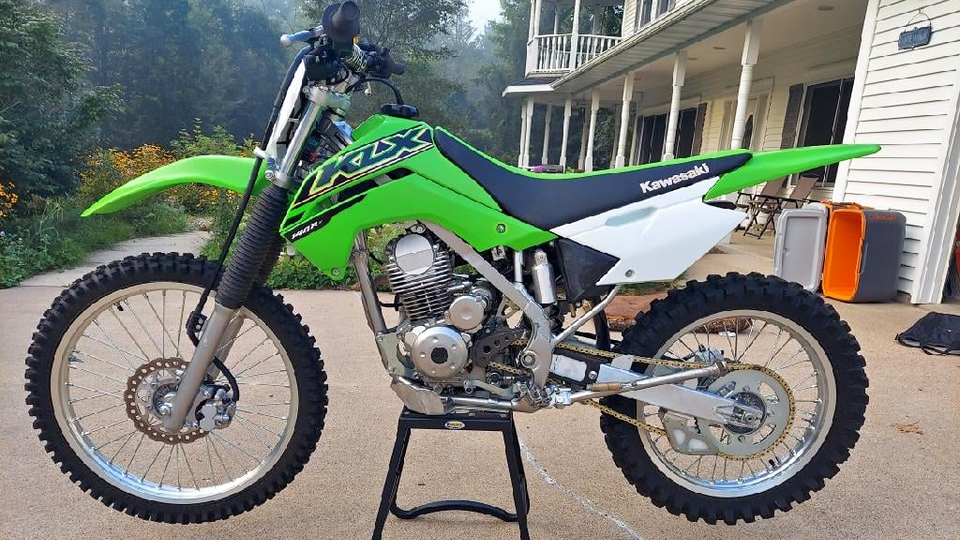
To get more horsepower and torque, you have to modify one of the following:
- Airbox
- Intake
- Carburetor
- Engine
- Exhaust
Upgrading or tuning certain parts in one of those systems can help (or hurt) the power, but you need to figure out what kind of power you want first. There's a difference between torque and horsepower, and it's important to know what you want.
When I say low-end torque, I'm talking about the power at low to midrange RPM. More torque means it will be able to accelerate faster at lower RPMs, and is generally easier to ride because it has a wider and smoother power curve.
Horsepower generally refers to peak power at high RPM. This is great for acceleration and top speed, but adding more HP usually means that the engine has a narrow power curve. This makes it hard to ride because it's "snappy" and hard to keep it in the "meat" or the power.
Before you make it faster
Before spending money on horsepower, ask yourself what's actually limiting the bike right now.
If you're bottoming the suspension, more horsepower isn't going to fix that. If first gear feels too tall on technical trails, gearing may make a bigger difference than an exhaust. And if the engine is hard to start, hesitates or doesn't respond cleanly, I'd fix the carb tuning before adding performance parts.
Airbox mod
Does your KLX 140 have a lid on the air box? If yes, you can open it up by drilling some holes for more potential power.
The stock air box is sealed up pretty well, which means the engine is better protected from dust and dirt getting through the air filter and into the engine, causing damage. But, this also limits the amount of air that can get to the carburetor.
By opening up the air box, more air will get in, and more air means the engine can make more power. But that's only if it's jetted properly. If you're concerned about dirt getting into the airbox, you can add some air vent filters (Amazon)
KLX140 Carb Tuning — The First Performance Mod I'd Do
The only performance modification I've personally done to this particular KLX140 is carb tuning—and it's the first place I'd start on a stock bike that doesn't start or run as well as it should.
One important thing to know: the stock KLX140 carburetor uses an air screw, even though this is a 4-stroke.
That's unusual because most 4-stroke dirt bike carburetors use a fuel screw.
The difference matters:
- Air screw: turning OUT = leaner; IN = richer
- Fuel screw: turning OUT = richer; IN = leaner
Don't assume which one you have just because the engine is a 4-stroke. Identify the carburetor and adjustment before tuning it.
The stock jetting is pretty lean from the factory, so it's hard to start and doesn't run very smoothly, depending on your climate. Going from a 38 pilot jet to a size 40 pilot should help it start more easily, especially when cold.
This jet is included in the Tusk Cold Start Jet Kit (Amazon)
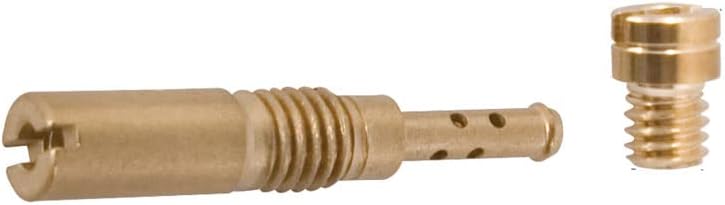
However, jet size depends on elevation, temperature, intake/exhaust changes and the individual bike, so I wouldn't blindly copy someone else's jetting. Use jet sizes as a starting point and tune based on how the engine actually responds.
If you have done air box or exhaust mods, you'll need to go richer (bigger), or else the air-fuel mixture will be too lean, and it will run worse.
Not sure if your KLX140 is running rich or lean?
Learn how to adjust the air mixture screw in just a few minutes.
Get the Free 4-Stroke Fuel Screw Guide →
*Just know that since it's an air screw, it tunes the opposite of a fuel screw.
Adjusting the air/fuel mixture screw?
The stock fuel/air screw is not adjustable - at least not with a regular tool. Why is this important? Because the fuel/air screw tunes the pilot jet circuit, which affects starting and roughly 0-¼ turn throttle position, which is where most people spend most of the time riding.
So, you can either buy a special D-shaped screwdriver that fits the air screw head or use some sort of grinder tool and hack away a slot so that a flat blade screwdriver fits.
Carb mod?
Maybe you're tired of dealing with the stock carb altogether, or have seen enough frustration from other KLX140 owners and simply want a better-performing carb right away.
A common mod is converting to a KX65 carb, which is a Mikuni VM24 (Amazon) - I say "convert" because it's not a simple "bolt-on" upgrade.
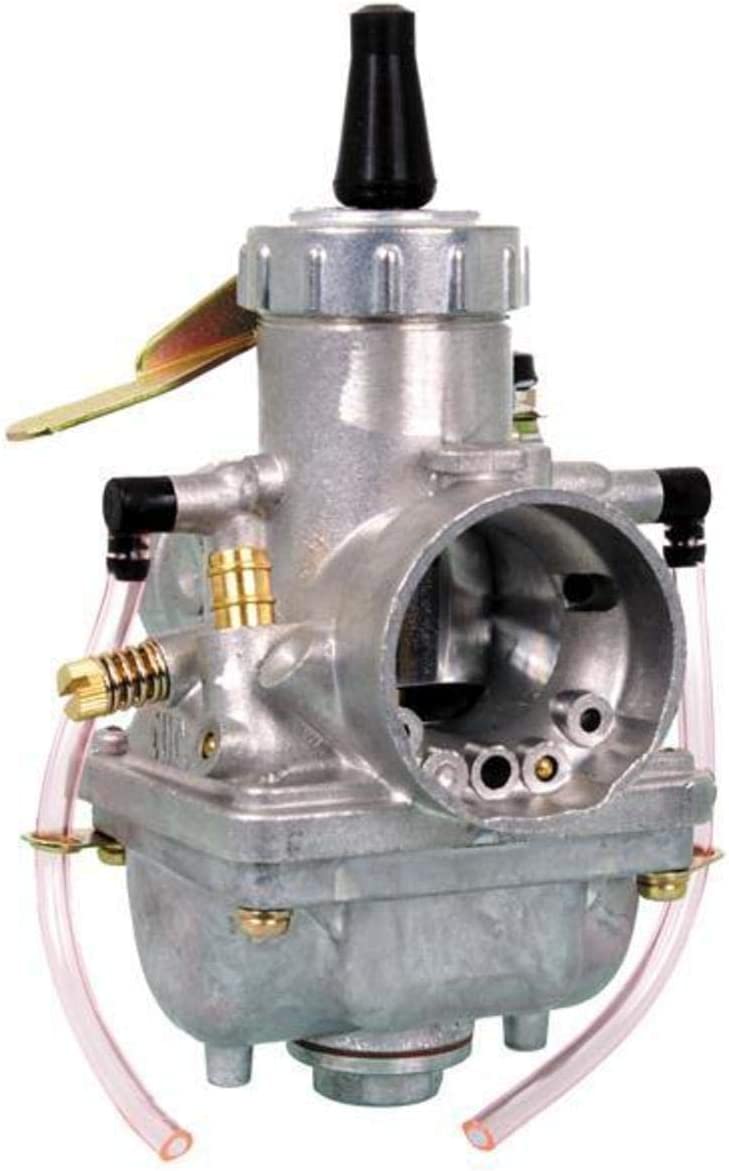
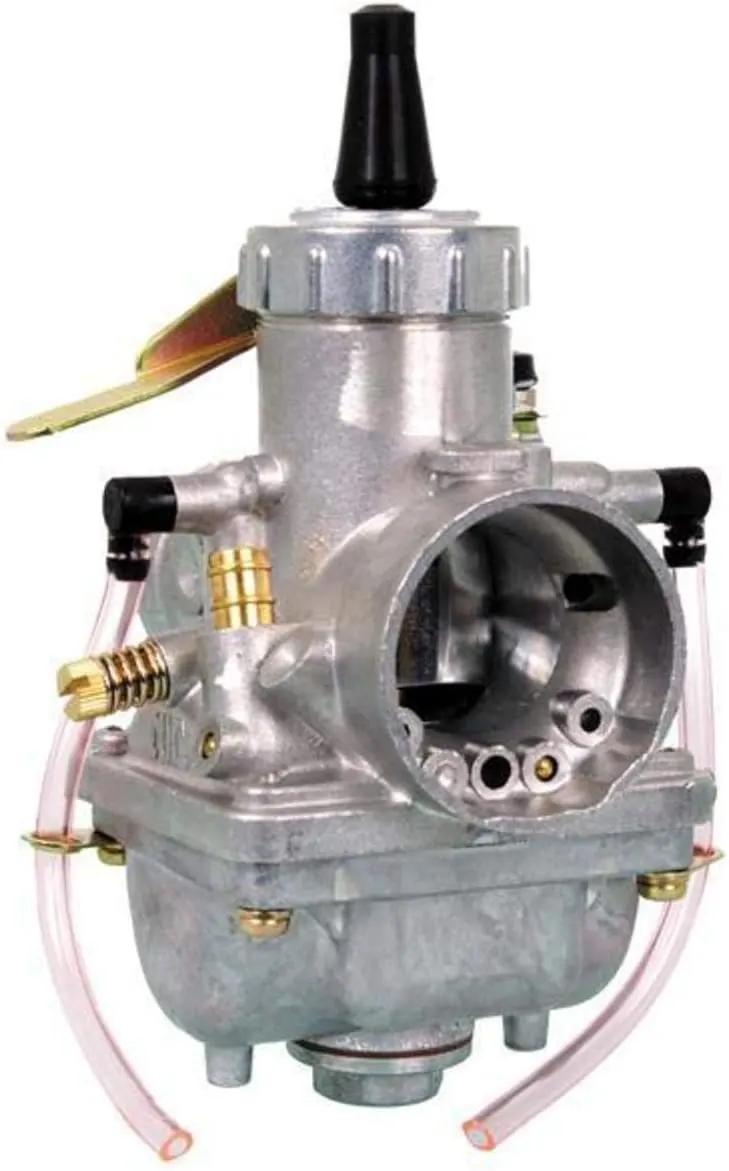
You'll need a custom intake boot to make it fit (more info on this TT thread), and then some jet tuning will most likely be necessary. A ballpark starting point is 20 pilot jet and a 120 main jet with the VM24. With some fabrication and tuning, you'll have an easier starting, better running, and more powerful bike.
Suspension upgrade
If you're an adult or heavier rider, suspension upgrades may improve your KLX140 more than adding horsepower.
The stock suspension is intentionally soft because this is a beginner-friendly trail bike. That's great at slower speeds, but heavier or more aggressive riders can overwhelm it fairly quickly.
The stock suspension on the KLX140 is good… if you're a beginner that weighs under 150lbs. But it also depends on which model you get.
With that said, if you're a heavier rider or you just want something that won't bottom out as easily because you're riding faster than the bike was intended for, there are some ways to improve the forks and shock.
Stock forks
The stock forks are like most conventional forks on a trail bike - nice and plush with very basic damping. This means that it absorbs bumps and obstacles well at low speeds, but it's like a pogo-stick when you pick up the pace.
Cheap fork upgrade
Budget suspension upgrade: A set of heavier fork springs (Amazon) is where I'd start before spending money on an expensive complete suspension conversion. Stiffer springs will make a big difference if you're over 130 lbs or ride aggressively.
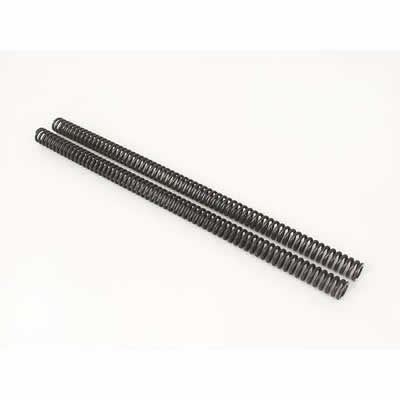
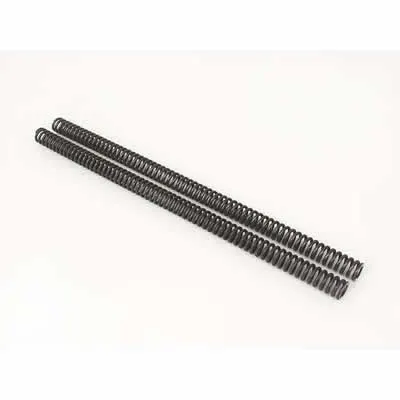
If it's too stiff using two heavy duty fork springs, you can use one stock and one stiffer to meet in the middle for the overall spring rate.
BBR part # for KLX140R L heavy duty fork springs is: 650-KLX-1405 (Amazon)
BBR part # for KLX140R F heavy duty fork springs is: 650-KLX-1505 (Amazon)
Next, you can use heavier weight fork oil (Amazon). This will slow down the compression and rebound damping.
Raising the fork's oil height will also help reduce bottoming. This reduces the air gap, making it harder to compress as the forks go down in the stroke.
Rear shock
The stock rear shock actually has some adjustments that you can make easily and for free. You can adjust the sag (ride height), which you need to do anyway to get the suspension balanced.
You also have some compression and rebound damping adjustment with the shock, which gives you more tunability to get better comfort. A stiffer shock spring (Amazon) will help if you're heavy or constantly bottoming out the rear shock.
BBR part # for KLX140L/KLX140G shock spring: 660-HCR-8005
Gearing swap
The stock gearing on the Kawasaki 140 is actually pretty tall compared to its competition, such as the TTR125. Simply put, first gear is higher, so you can't ride quite as slow. It's not quite the same as 2nd on the Yamaha, but it's close - more like a 1.5 gear for speed.
| If you want... | Change |
|---|---|
| Slower first gear / easier technical trails | Smaller front or larger rear sprocket |
| More acceleration | Smaller front or larger rear |
| Lower cruising RPM / potentially more top speed | Larger front or smaller rear |
For tight trail riding, I'd generally rather improve low-speed control than chase top speed on a KLX140.
You can do a quick sprocket swap to get more acceleration by going to a smaller front sprocket (Amazon) or a bigger rear sprocket. Or, if you have more power and want to take advantage of the extra torque to be able to short-shift, you can go bigger on the front/smaller on the rear for wider gearing and more top speed.
Want the bike to feel easier to control on the trails?
Bike setup helps, but technique makes an even bigger difference. I've put together a free guide showing the mistakes that commonly hurt trail-riding confidence.
Get the Free Trail Confidence Guide →
Best KLX 140 exhaust upgrade?
An exhaust would not be one of my first KLX140 mods.
The stock exhaust is quiet, reliable and works well for trail riding. I'd spend money on proper jetting, gearing or suspension before replacing it.
If you specifically want less weight, a different sound or you're combining the exhaust with other engine/intake modifications, then an aftermarket system makes more sense.
The best exhaust upgrades for your KLX 140 are:
- Stock exhaust mod - Remove muffler baffle for better throttle response but more noise
- FMF Powercore 4 (Motosport) - Slip-on (muffler only) for better/more sound and slightly more power
- Yoshimura RS9 system (Motosport) - Full system with better sound, power, less weight, spark arrestor, and quiet insert included (best overall system without being obnoxious)
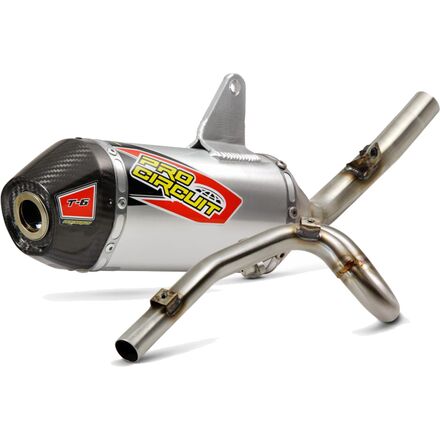
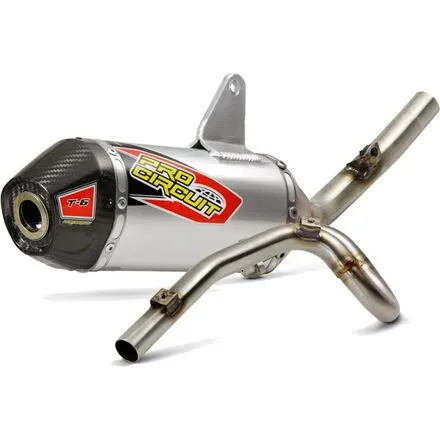
- Pro Circuit T6 (Motosport) - Full system with more power, less weight, more packing for slightly less noise, and a removable spark arrestor screen (great full system that looks good and is a little quieter than the PC T4)
Do you need to "Re-jet" after changing exhaust?
Changing the exhaust, whether it’s stock or aftermarket, will change the air-fuel mixture because more exhaust is being pulled through the engine. This means that you’re going to have to adjust the carb jetting if you want the most power.
For example, if your bike is stock and the jetting is perfect for your climate, but then you put a Yoshimura exhaust system on it. It’s going to run leaner and it might actually have LESS power at certain RPMs - the opposite of what you might think is happening because it sounds faster.
So, you need to re-jet some or all of the jet circuits if you want it to:
- Start easily
- Have more power
- Run smoothly - a poorly jetted dirt bike carb makes it erratic and hard/frustrating to ride
- Be more reliable
- Last longer
Should You Keep Modifying the KLX140 - or Buy a Faster Bike?
There's a point where modifying a KLX140 stops making financial sense.
If you love the chassis, size and easy-going character of the bike, suspension, gearing, carb and moderate engine upgrades can make it significantly better for you.
But if you're considering expensive suspension, a carb, exhaust, big-bore kit and other engine work because you've simply outgrown the bike, I'd stop and compare the total cost with moving to a larger trail bike.
More modification isn't always the answer—especially if what you really need is more suspension travel, a larger chassis and substantially more power.
Outgrowing the KLX140?
See which bikes I'd choose next depending on your size, experience and the trails you ride.
Next: Best 4-Stroke Dirt Bikes for Trail Riding →
Big Bore Kit — Is 170cc Worth It?
If you've already tuned the carb, set up the gearing and suspension, and still want significantly more power, a 170cc big-bore kit is one of the biggest engine upgrades you can make to a KLX140.
A common 170cc kit uses a larger 63mm cylinder and piston to increase displacement. Unlike an exhaust or airbox modification, you're actually increasing the size of the engine, so you can expect a more noticeable increase in torque and power throughout the RPM range. bbrmotorsports.com
For trail riding, I'd be more interested in the added low-end and midrange torque than chasing peak horsepower. That's what can make the bike easier to short-shift and give it more pull coming out of corners or climbing hills.
But I wouldn't make this my first KLX140 mod.
Before opening the engine, I'd make sure you're happy with the carb tuning, gearing and suspension. You'll also need to make sure the carb is properly jetted for the larger engine.
One important fitment note: don't assume every 170cc kit installs exactly the same on every model year. For example, at least one current 170cc kit requires case boring on 2025+ KLX140s while earlier versions are described as bolt-on, so verify fitment for your exact year before ordering.
Will a KLX140 big bore still be reliable?
A properly assembled and tuned big-bore engine can still be very reliable, but I wouldn't claim that it will necessarily last as long as a completely stock KLX140.
You're increasing displacement, compression and load on other components. How long it lasts will depend heavily on the quality of the parts and installation, carb tuning, maintenance and how hard you ride it.
If the engine already has a lot of hours, this is also a good opportunity to inspect other wear items while you have it apart rather than installing a big-bore kit on top of a tired engine.
My take: If you love the KLX140's size and chassis and simply want more torque, a big bore can make sense. If you're considering a big bore, carb, exhaust and expensive suspension just because you've outgrown the bike, I'd compare that total investment with moving to a larger trail bike first.
Lightened Flywheel — Better Throttle Response, But There's a Trade-Off
A lightened flywheel doesn't actually add horsepower. It reduces rotating mass, allowing the engine to gain and lose RPM more quickly.
That can make the KLX140 feel more responsive and aggressive when you open the throttle.
But there's a reason trail bikes generally use more flywheel mass.
A heavier flywheel helps smooth the engine's power delivery and keeps the engine turning at low RPM, which can make the bike easier to control and harder to stall on tight, technical trails.
Lightening it moves the bike in the opposite direction.
I'd consider a lightened flywheel if:
- You want a quicker, snappier engine response
- You ride more aggressively and don't mind sacrificing some low-speed forgiveness
- You've already addressed the more important limitations of the bike
I would not make this one of my first modifications for a beginner or casual trail rider.
For the type of riding the KLX140 does especially well, I generally prefer smooth, predictable low-RPM power over making the engine feel snappier.
That doesn't make a lightened flywheel a bad modification—it just solves a fairly specific problem.
KLX140 Auto Clutch — Is It Worth It?
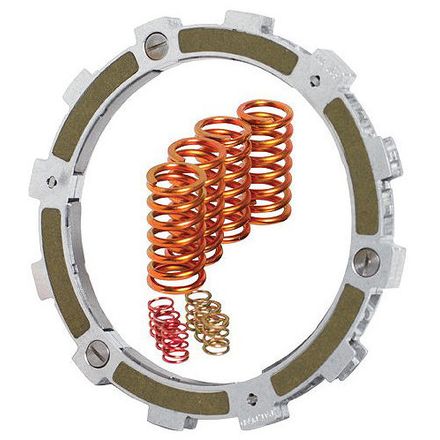
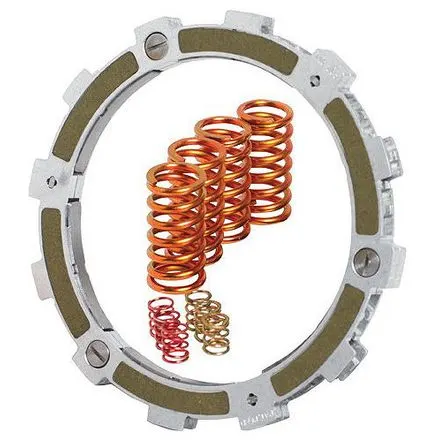
An auto clutch (MotoSport) can make a KLX140 much harder to stall because it automatically engages and disengages the clutch as engine RPM changes.
That can be useful for a rider who struggles with clutch control, frequently stalls on technical trails, or simply wants to concentrate more on line choice, balance and throttle control.
But I wouldn't consider an auto clutch a necessary KLX140 upgrade.
For a newer rider, learning proper clutch control is still an extremely valuable skill. Once you understand the friction zone and learn to coordinate the clutch and throttle, those skills transfer to virtually every manual dirt bike you ride afterward.
So I'd look at an auto clutch as a solution to a particular need rather than an automatic upgrade.
I'd consider one if:
- Stalling is significantly hurting your confidence or enjoyment
- You ride very tight or technical terrain
- You have a physical limitation that makes clutch use difficult
- You simply prefer the riding experience of an auto clutch
If you're only considering one because clutch control is currently difficult, I'd work on technique first before spending hundreds of dollars trying to solve it with parts.
Which KLX140 Mods Should You Do? 3 Setups I'd Choose
You don't need every modification on this page.
Start with what you want the bike to do better, then spend money on the parts that actually solve that problem.
1. Beginner or Casual Trail Rider
This is how I'd set up most KLX140s:
- Properly tune the stock carb
- Adjust the gearing if first gear is too tall for your trails
- Set the suspension sag and adjustments for your weight
- Add stiffer springs if you're too heavy for the stock spring rates
- Leave the engine and exhaust alone unless you actually need more power
For this rider, I'd prioritize smooth power, low-speed control and confidence over horsepower.
A louder exhaust, big-bore kit or lightened flywheel isn't necessarily going to make the bike more fun to ride.
2. Heavier or More Aggressive Trail Rider
If you like the KLX140 but you're pushing beyond what the stock setup was designed for, I'd focus on:
- Suspension springs and setup
- Proper carb tuning
- Gearing for your terrain
- Intake/carb modifications if you still want better throttle response
- Exhaust if you want additional performance and don't mind more noise
Notice that I put suspension ahead of engine modifications.
If you're constantly bottoming the forks or shock, adding horsepower only lets you overwhelm the chassis faster.
3. Performance KLX140 Build
If you simply love the KLX140 and want to see how good you can make it, then I'd build the bike as a complete package:
- Suspension
- Carburetor/intake
- Exhaust
- Big-bore kit
- Proper jetting for the entire combination
- Gearing matched to the new power and the type of riding you're doing
At this point, you're no longer just fixing weaknesses—you're building a modified KLX140.
That can be a fun project, but keep track of what you're spending.
When I'd stop modifying the KLX140
If you're considering a big bore, aftermarket carb, full exhaust and expensive suspension because you need substantially more power, better high-speed handling and more suspension travel, you may have simply outgrown the bike.
Have you outgrown your KLX140?
Before spending another $1,000+ modifying it, compare it with the larger trail bikes I'd choose for different riders and terrain.
Next: Best 4-Stroke Dirt Bikes for Trail Riding →
What Should You Do Next?
The best KLX140 mod depends on why you're modifying it.
If it starts hard or doesn't run cleanly, start with the carb.
If you're bottoming the suspension, fix the suspension.
If first gear feels too tall on tight trails, change the gearing.
And if you're spending hundreds or thousands of dollars trying to turn the KLX140 into a completely different motorcycle, it may be time for a different bike.
Still deciding whether the KLX140 is the right bike for you?
I've owned multiple KLX140s and break down the different wheel sizes, suspension, power, rider fit and who I think should buy each model.
Next: Kawasaki KLX140 Review — Which Model & Size Is Best? →