
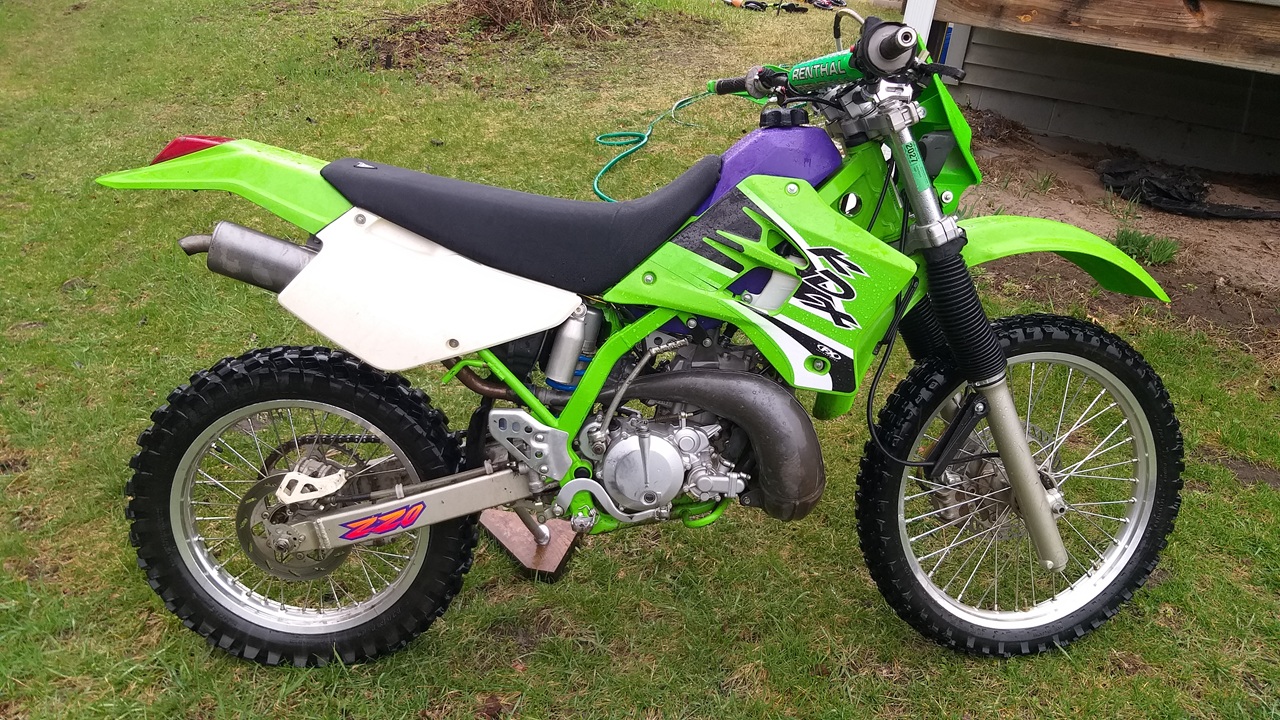
If your KDX220 is running rich, sputtering or bogging even after rejetting, don't assume it just needs smaller jets. On this 1997 KDX220, I eventually found a leaking Keihin PWK jet-block gasket that was causing an abnormally rich condition.
This bike would sputter and load up at low RPM, and even major jetting changes didn't completely fix it. One of the biggest clues was that it ran noticeably better when I shut the fuel off and let the float-bowl level drop.
After replacing the leaking jet-block gasket and finishing the carb tuning, the bike ran dramatically better. My final settings were a 40 pilot, 145 main, JD Red needle in the 3rd clip, 2 turns out on the air screw and 18 mm float height.
Below I'll show you the symptoms, the tests that led me to the problem, and what I'd check if your KDX220 is doing the same thing.
Quick Answer: Why Was This KDX220 Running So Rich?
This KDX220 had more than one thing contributing to its rich condition.
It arrived with a 52 pilot jet, 155 main jet, JD Red needle in the 4th clip position and approximately 16 mm float height.
I eventually ended up with:
| Carb Setting | Before | Final |
|---|---|---|
| Pilot jet | 52 | 40 |
| Main jet | 155 | 145 |
| Needle | JD Red | JD Red |
| Needle clip | 4th | 3rd |
| Air screw | — | 2 turns out |
| Float height | 16 mm | 18 mm |
I also replaced the leaking Keihin PWK jet-block gasket, ultrasonically cleaned the carburetor and installed a fresh BR8ES spark plug.
Important: Don't copy these jet sizes blindly into your KDX220. Elevation, temperature, fuel, premix, engine condition, intake/exhaust modifications and even the individual carburetor can change what your bike needs.
The important lesson from this KDX220 wasn't a magic combination of jets.
It was learning to recognize when normal jetting changes aren't fixing the underlying problem.
This KDX220 came to me through my Fager Powersports carb-tuning service in Oak Grove, Minnesota. I diagnose and tune 2-stroke and 4-stroke dirt bike carburetors, so the process below is the same kind of symptom-based diagnosis I use on customer bikes rather than simply installing a generic jetting combination.
Symptoms This KDX220 Had
The owner primarily rides trails at low to moderate RPM and complained that the bike:
- Sputtered and spit while accelerating at low RPM
- Didn't respond cleanly to the throttle
- Had trouble idling properly with previous jetting changes
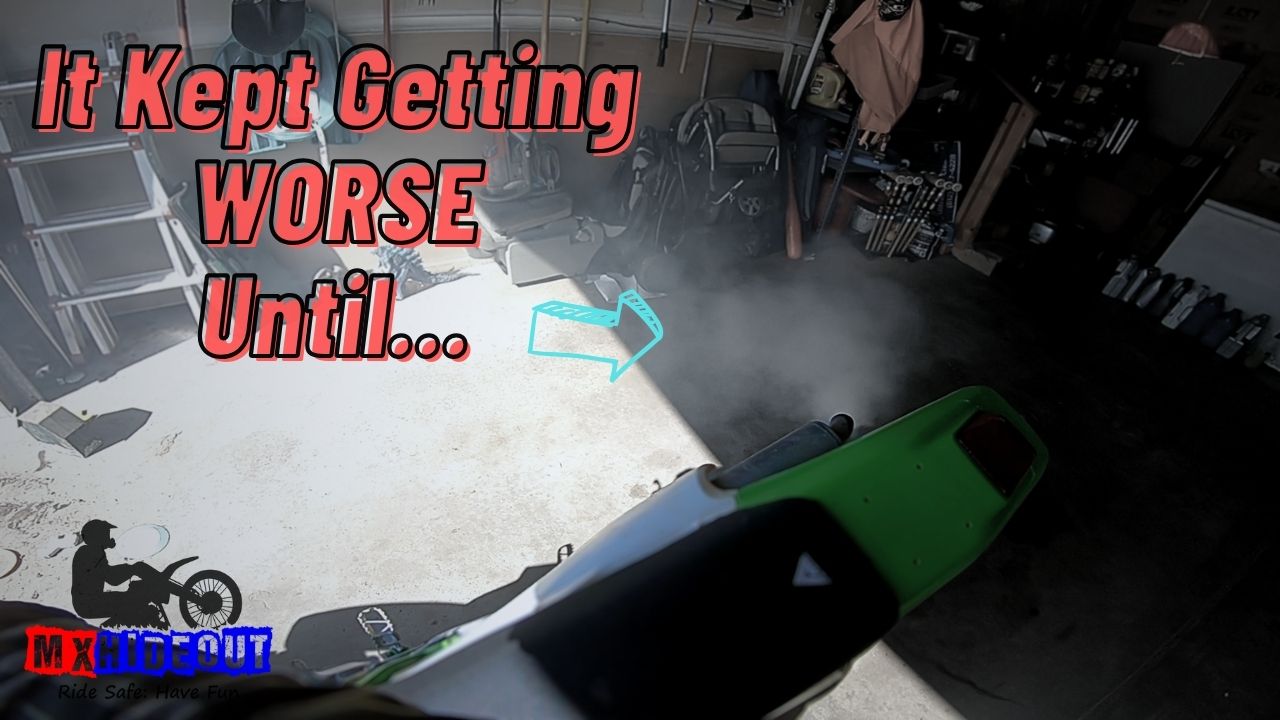
- Smoked heavily
- Sounded like it was loading up with fuel
One of the first clues appeared before I even rode it.
The engine was cold, but I tried starting it without the choke because I already suspected the 52 pilot was too rich.
It started on the first kick.
That's not absolute proof that a two-stroke is rich, but combined with the smoke, sound, throttle response and existing jetting, it was another clue pointing in that direction.
Once it warmed up, it continued sputtering and sounding loaded up at low RPM.
I Started With the Air Screw
Before randomly replacing jets, I like to use the air screw to see what the pilot circuit wants.
On this PWK carb, opening the air screw allows more air into the pilot circuit and makes the mixture leaner.
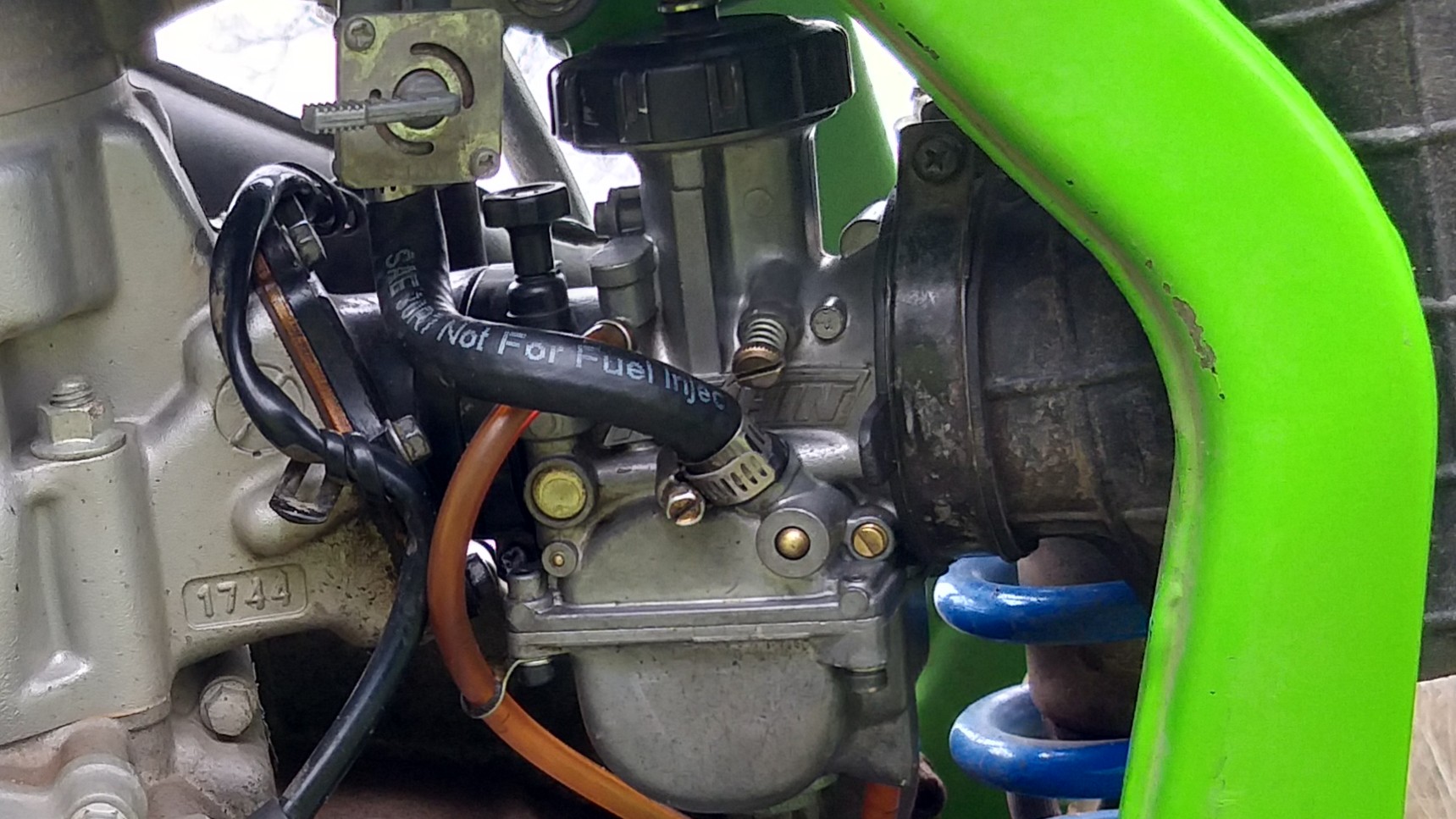
I tested the bike with the air screw only about ½ turn out.
It got worse.
The bike became harder to start and didn't want to idle.
Then I went the opposite direction and opened the air screw to approximately 2 ½ turns.
It started and idled better.
That was another indication that the engine wanted a leaner pilot circuit.
So instead of guessing, I now had multiple clues pointing in the same direction.
Not sure what your air screw is telling you?
Before changing your pilot jet, learn how to adjust a 2-stroke air screw and tell whether your pilot jet is too rich or too lean →
The 52 Pilot Jet Was Way Too Rich
I pulled the float bowl and confirmed that it really did have a 52 pilot jet.
Since the bike was still rich even with the air screw opened considerably, I started going leaner on the pilot.
A 45 pilot noticeably improved the bike. It became more responsive, made better power and smoked less.
But it still wasn't right.
There was still sputtering through the midrange, and the bike continued showing signs that it was getting too much fuel.
If your air screw adjustment shows that the pilot jet itself is too rich or too lean, here's how I choose and adjust the correct pilot jet →
I also checked the air filter to make sure a dirty or plugged filter wasn't restricting airflow and making the bike run rich.
The filter looked good.
I Changed the Needle and Main Jet Too
The KDX220 had a JD Red needle in the 4th clip position.
I experimented with the needle position and eventually also made a much larger main jet change because the entire bike continued to act excessively rich.
I went all the way down to a:
- 40 pilot
- 145 main
I also lowered the fuel level by changing the float height.
At this point, I had made a substantial difference in how much fuel the carburetor should have been supplying.
And that's where this diagnosis became more interesting.
The bike was still loading up.
A fresh spark plug didn't solve it either.
That made me increasingly suspicious that I wasn't dealing with a normal jetting problem anymore.
The Clue That Changed My Diagnosis
While testing the bike, I shut the petcock off.
As the fuel level in the float bowl started dropping, the engine suddenly began to:
- Idle better
- Rev cleaner
- Respond better to the throttle
Then I turned the fuel back on.
It got worse again.
That's an extremely useful diagnostic clue.
If reducing the available fuel makes an excessively rich-running engine improve, something is telling you the engine is getting too much fuel.
I initially continued looking at float height and the float needle because either could affect fuel level.
Think your carb's fuel level may be too high or low?
Here's how to check and adjust dirt bike carb float height →
But even after lowering the fuel level, the KDX still wasn't behaving normally.
That's when the jet-block gasket became a serious suspect.
The Real Problem: A Leaking PWK Jet-Block Gasket
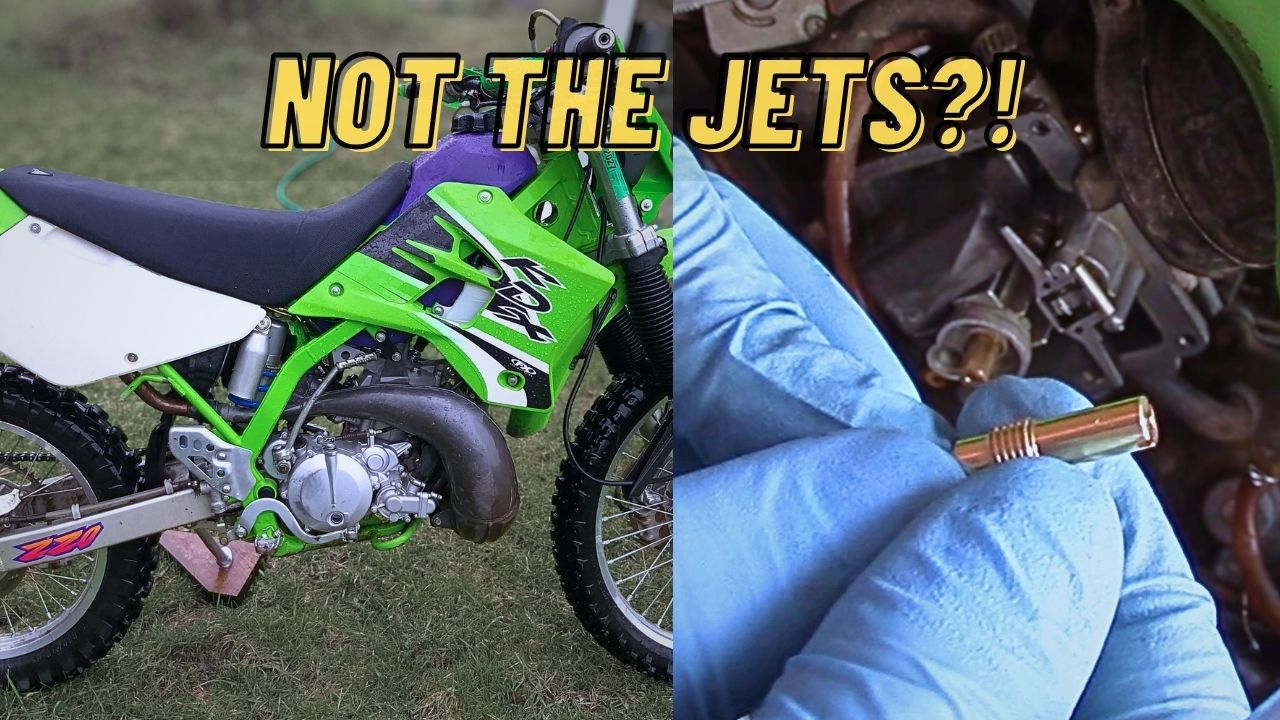
The Keihin PWK carburetor has a gasket sealing the removable jet block inside the carburetor.
I removed the carb and tested that gasket.
It leaked.
During the test, I could see bubbles where the gasket should have been sealing.
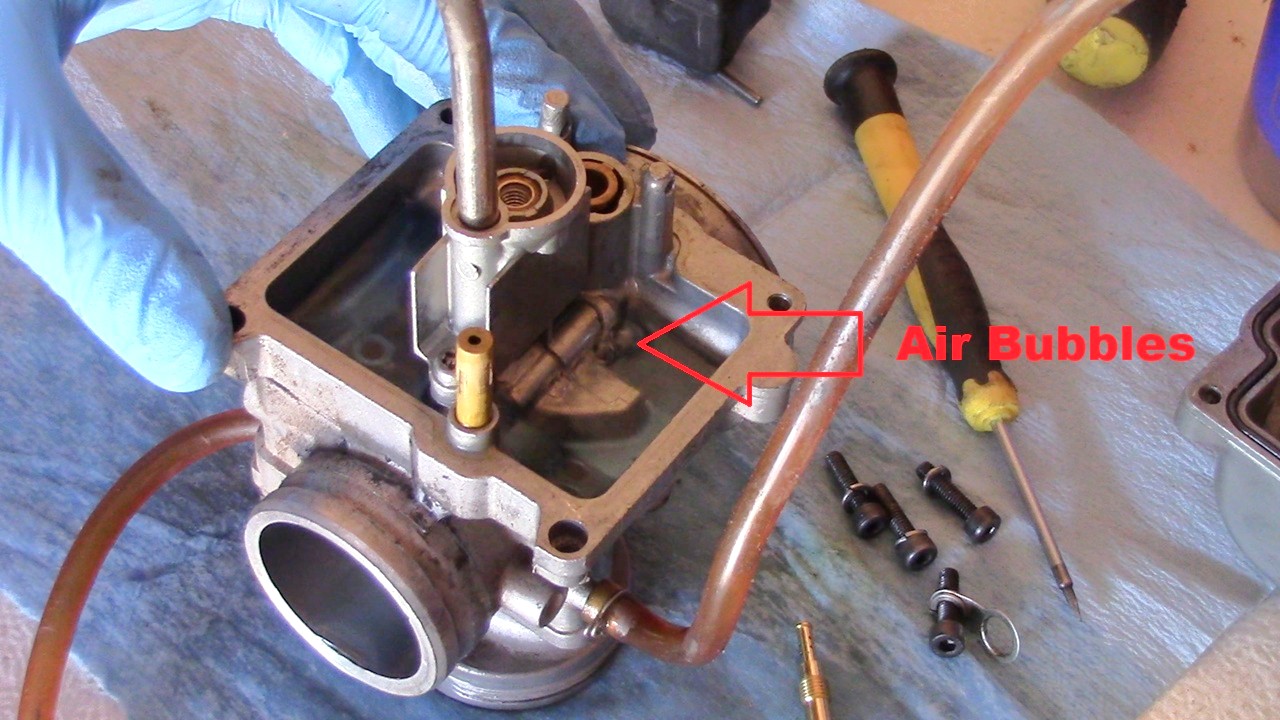
That meant I could keep changing jets and adjusting the air screw, but I was trying to tune around an internal carburetor problem.
I replaced the jet-block gasket and put the carb back together.
The difference was immediate.
On the next test ride, the KDX220 sounded and felt dramatically better. Throttle response was much crisper, it wasn't loading up like before, and it finally responded normally enough that I could finish dialing in the pilot circuit.
If your KDX220 still seems excessively rich after you've gone significantly leaner on the jets, don't automatically keep installing smaller jets.
A leaking jet-block gasket is one of the things I'd check.
Signs Your KDX220 Jet-Block Gasket May Be Leaking
I wouldn't replace the gasket just because your bike is slightly rich.
But I'd become suspicious if you're seeing a combination such as:
- The bike runs excessively rich at low RPM
- It blubbers or sputters despite leaner jetting
- The air screw doesn't respond the way you'd expect
- You're using surprisingly small jets just to make it run reasonably clean
- It loads up badly after idling
- Turning the fuel off temporarily makes it run better
- You've already ruled out the air filter, float level and other obvious causes
The big warning sign for me is when your tuning changes stop making sense.
If you've made a substantial jetting change that should noticeably affect the mixture and the engine is still behaving abnormally rich, stop assuming the next smaller jet will fix everything.
Find out why.
Final KDX220 Jetting Settings
After diagnosing the carb problem and finishing the tuning, this particular 1997 KDX220 ended up at:
- Pilot jet: 40
- Air screw: 2 turns out
- Needle: JD Red
- Needle clip: 3rd position
- Main jet: 145
- Float height: 18 mm
- Spark plug: BR8ES
- Fuel: 91-octane non-oxygenated
- Premix: Kawasaki 2-stroke oil at 32:1
The bike was stock with the stock pipe, silencer and airbox configuration.
Again, use these as a real-world reference, not a universal KDX220 jetting chart.
Your bike may require different settings.
What matters more is using the symptoms and the engine's response to each adjustment to determine whether you need to go richer or leaner.
Want to tune your 2-stroke instead of guessing at jets?
My free 2-Stroke Air Screw Tuning Guide shows you how to use your bike's response to determine whether the pilot circuit is rich or lean—and whether the pilot jet needs changing.
Get the Free 2-Stroke Air Screw Guide →
Don't Change Everything at Once
Normally, I prefer changing one thing at a time when tuning a carburetor.
If you change the pilot, needle, main jet and float height all at once and the bike gets better—or worse—you don't know which adjustment caused the change.
For a trail bike like the KDX220, I generally like to start with the pilot circuit and air screw because that's where you're spending so much time at low throttle openings.
Listen to the bike.
Test one change.
See whether the symptom improves or gets worse.
Then move to the next circuit.
In this case I eventually made larger changes because the bike was so obviously rich, but when those changes still didn't produce the results they should have, that became part of the diagnosis.
Watch the Complete KDX220 Diagnosis
I recorded the actual tuning process while diagnosing this bike, including the rich symptoms, air-screw tests, jet changes, test rides and eventually finding the leaking jet-block gasket.
One advantage of watching the video is being able to hear the rich sputtering and compare how the engine responds before and after the changes.
What I'd Check If Your KDX220 Is Bogging or Running Rich
If I were diagnosing another KDX220 with similar symptoms, I wouldn't immediately order somebody else's recommended jets.
I'd work through the problem in roughly this order:
- Confirm whether the symptom actually sounds and feels rich or lean.
- Make sure the air filter isn't dirty or over-restricting airflow.
- Check the current pilot, main, needle position and air-screw setting so you know your baseline.
- Use the air screw to test the pilot circuit.
- Check the float height and float needle/seat.
- Make one jetting change and test the result.
- If the bike remains abnormally rich despite jetting that should be lean enough, check the PWK jet-block gasket.
- Once the carb itself is working correctly, finish dialing in the pilot, needle and main circuits.
Not sure where your bog is coming from?
The KDX220 had an unusual carb problem, but most bogging problems can still be narrowed down by the sound, throttle position and whether the engine is rich or lean.
Next: How to Diagnose a Dirt Bike Bog Step-by-Step →
The goal isn't to install the same jets that worked in someone else's KDX.
The goal is to make each adjustment for a reason and let the engine tell you whether you're going in the right direction.
Near Oak Grove, Minnesota and want me to diagnose it?
I offer dirt-bike carburetor diagnosis and tuning through Fager Powersports in Oak Grove, MN. I work on both 2-stroke and 4-stroke dirt bikes, including problems that don't turn out to be solved by simply changing jets.
Your Next Step: Figure Out Which Carb Circuit Is Causing the Problem
The KDX220 in this article had an unusual internal carb problem—but most bogging and sputtering problems are still caused by normal jetting.
Before changing jets, your next step is figuring out whether the bike is rich or lean and which throttle position the problem happens at.
Next: Rich vs. Lean Dirt Bike Symptoms — How to Tell the Difference →